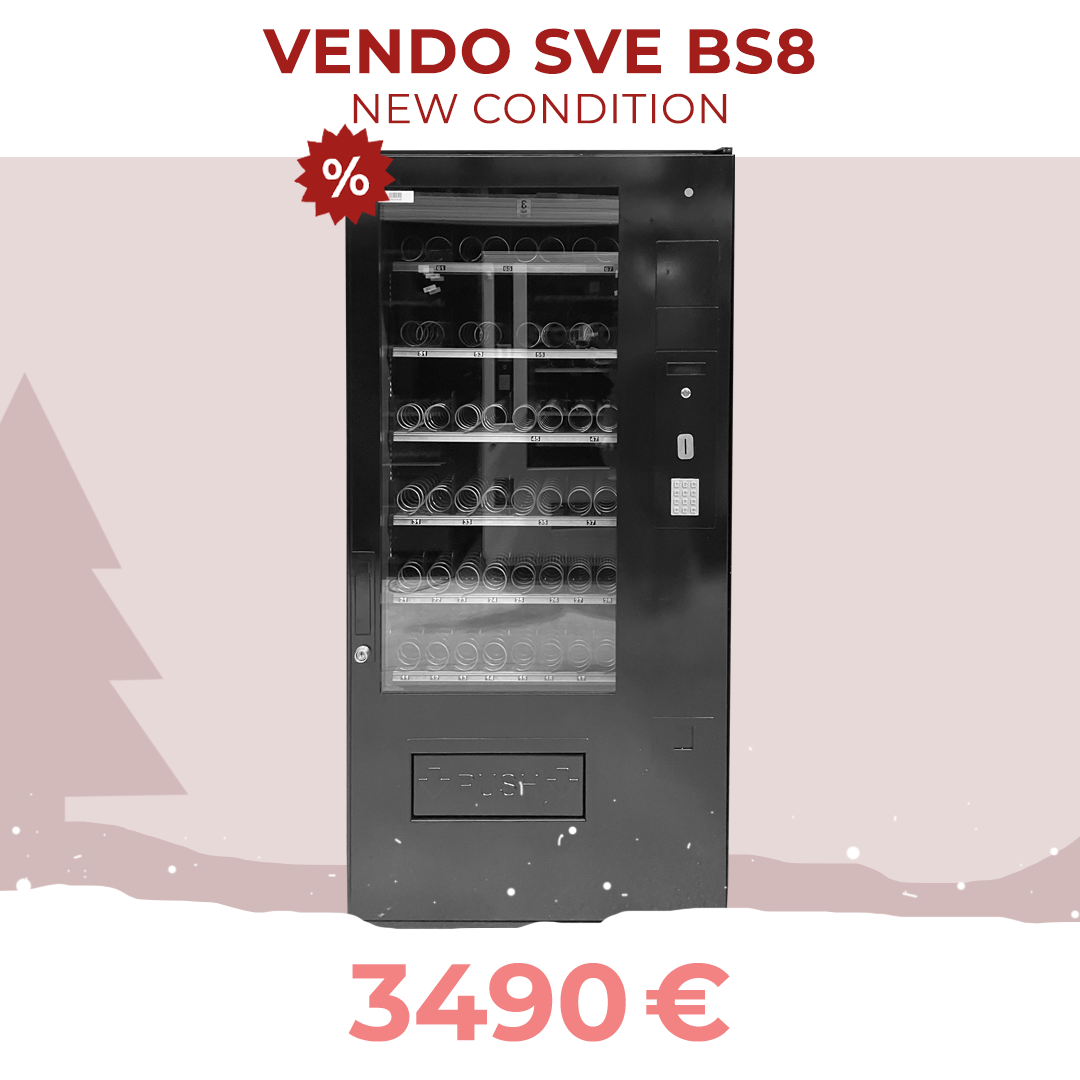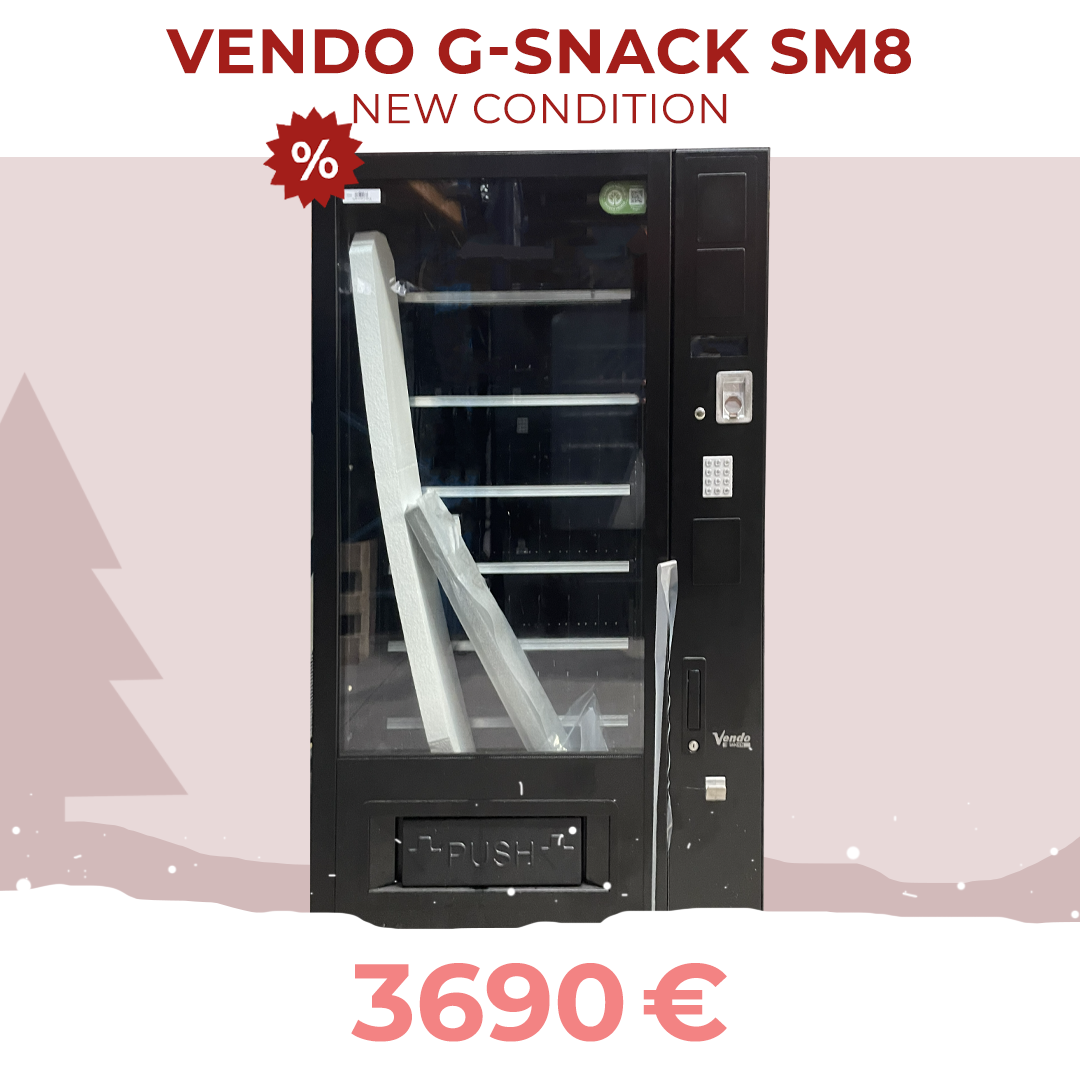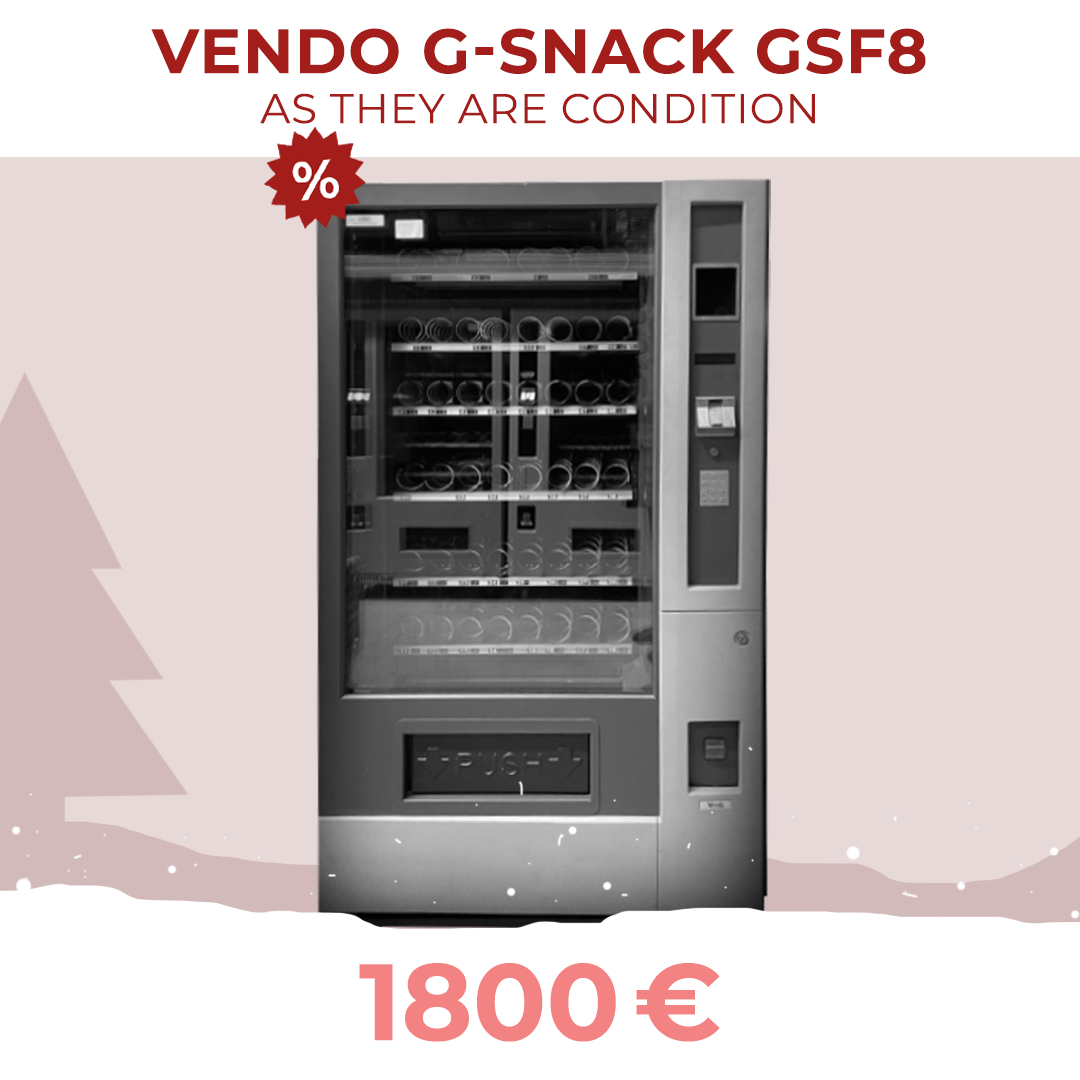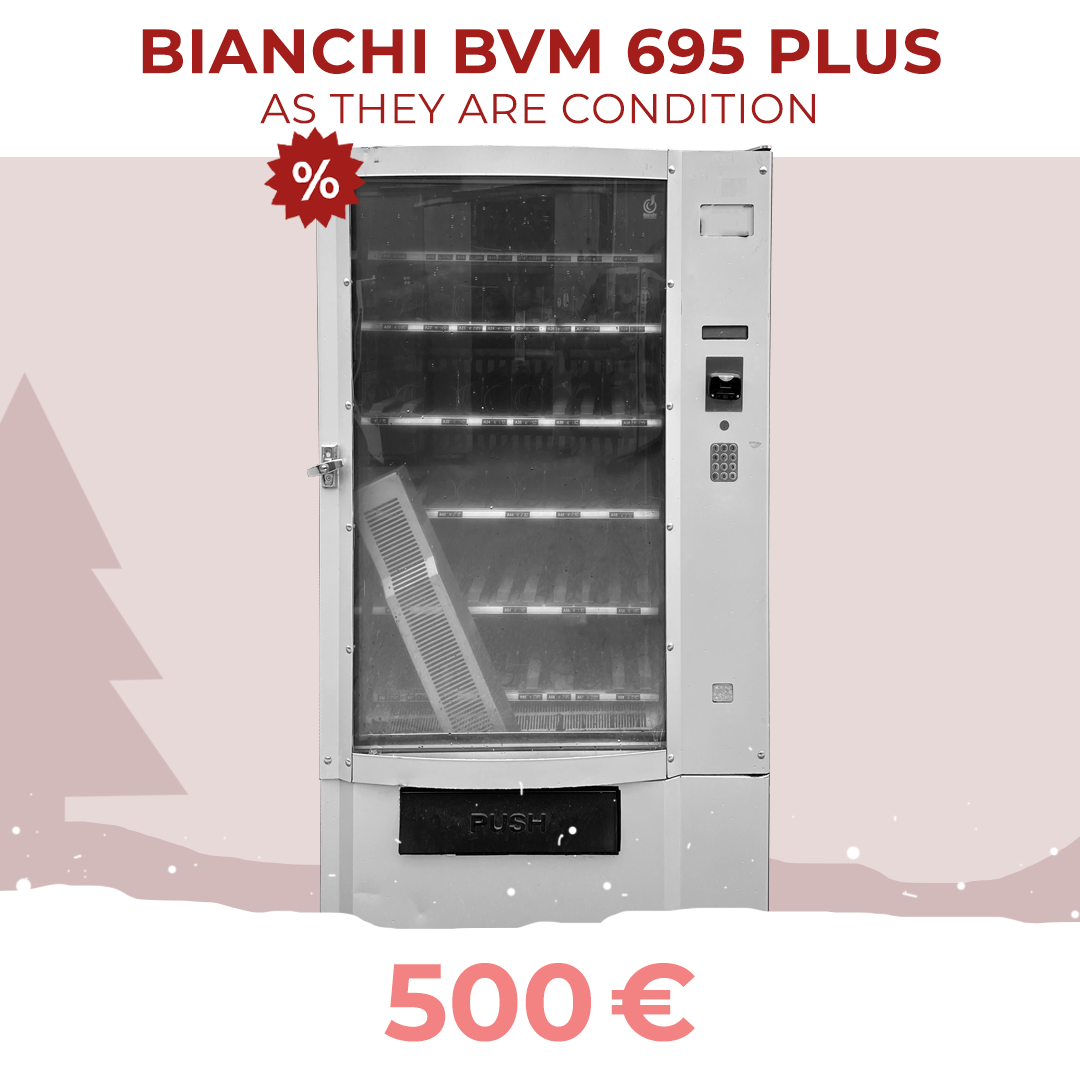
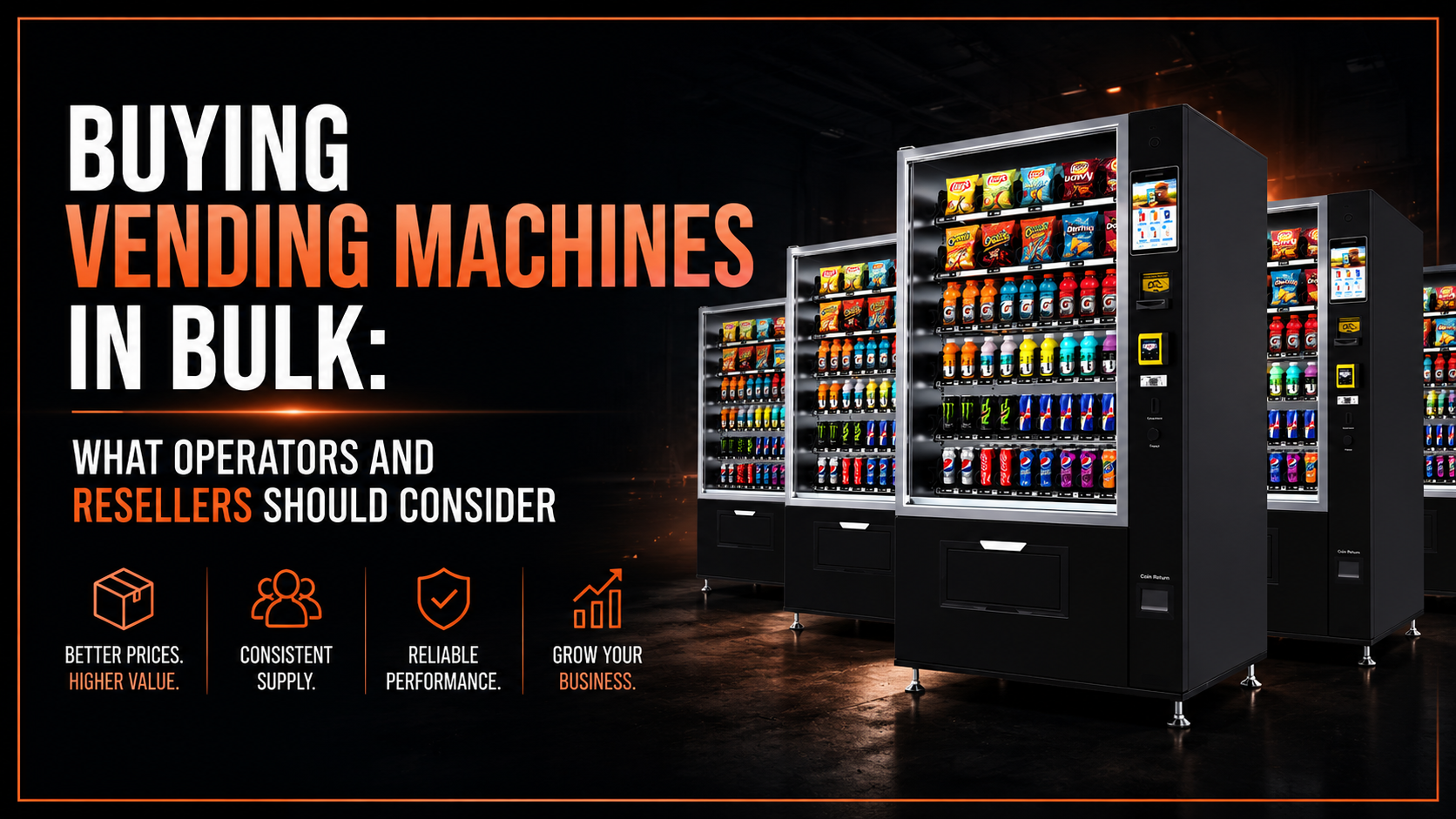
Buying one vending machine is relatively straightforward.
Buying 10, 20, 50, or even 100 machines is a completely different decision.
For established vending operators, purchasing in bulk can be an efficient way to expand a route, standardize a fleet, or prepare for new locations. For resellers and refurbishers, larger purchases can provide inventory at a more competitive cost and create room for resale margins.
But the lowest price per machine should never be the only consideration.
Machine condition, model compatibility, spare parts, transportation, preparation costs, and the intended use of the machines can all have a major impact on whether a bulk purchase actually makes financial sense.
Here are the most important things operators and resellers should consider before purchasing vending machines in larger quantities.
1. Start With the Purpose of the Purchase
Before comparing machines, decide what you actually need the stock for.
An operator expanding an existing route has very different requirements from a reseller purchasing machines for refurbishment and resale.
Operators may prioritize:
- Reliable machines that can be deployed quickly
- Models already familiar to their technicians
- Similar configurations across multiple locations
- Easy access to spare parts
- Compatibility with existing payment systems
Resellers may prioritize:
- Competitive acquisition cost
- Machines with strong resale demand
- Models that are economical to repair
- Larger quantities of similar machines
- Flexibility to refurbish or customize machines themselves
This distinction matters because the cheapest machine is not necessarily the best machine for every buyer.
A reseller with an experienced technical team may see considerable value in machines requiring preparation. An operator who needs 20 machines installed quickly may benefit from paying more for machines that have already been tested or refurbished.
2. Understand Exactly What Condition You Are Buying
This becomes especially important when purchasing used vending machines.
Two machines of the same model and year can represent very different investments depending on their condition.
At VendingOutlet, for example, used machines are available in several service categories:
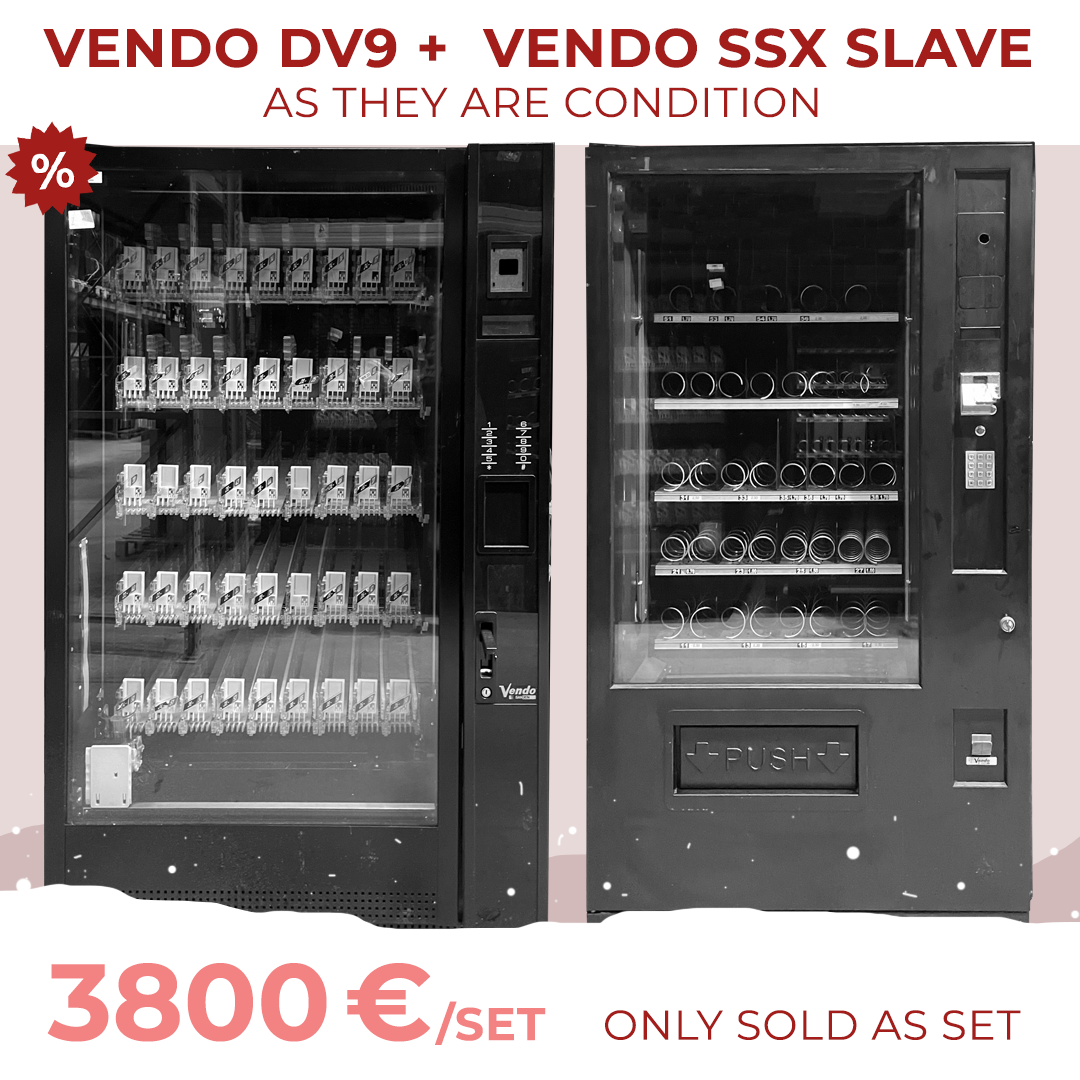
As They Are
These machines are sold in their existing condition. They are not inspected or cleaned and may have missing components.
The advantage is the lower purchase price.
For experienced operators, technicians and resellers with their own workshop capabilities, this can be an attractive way to acquire machines in volume.
However, buyers should calculate the additional cost of inspection, cleaning, repairs and replacement components before deciding whether the purchase makes sense.
Complete
The major components are present, but operation is not guaranteed. This can offer a middle ground for buyers who are comfortable performing thei
This can offer a middle ground for buyers who are comfortable performing their own technical work but want greater certainty regarding the completeness of the machines.
Tested
The machines are assembled, cleaned and technically evaluated, with essential operating functions inspected.
This reduces some of the uncertainty involved in purchasing used equipment and can be particularly valuable for operators who want to reduce the amount of preparation required after delivery.
Refurbished
These machines undergo testing as well as more comprehensive internal and external refurbishment, including cleaning and replacement of components where necessary.
For operators who want equipment closer to deployment-ready condition, the additional preparation can justify the higher initial investment.
The important point is simple:
Always compare total preparation cost - not just purchase price.
3. Standardization Can Save Money Later
When buying in bulk, having 20 similar machines can sometimes be more valuable than having 20 individually attractive deals.
A standardized fleet can simplify:
- Technician training
- Spare-parts inventory
- Maintenance procedures
- Programming and configuration
- Payment-system installation
- Product setup
- Troubleshooting
Imagine operating five different machine models from five manufacturers.
Your technicians may need different components, documentation and experience for each one.
Now compare that with operating 20 machines from the same product family.
Maintenance becomes much easier to organize.
Deshalb sollten Betreiber nicht nur den einzelnen Automaten betrachten, sondern auch berücksichtigen, wie ein Großeinkauf zum restlichen Maschinenbestand passt.
4. Prüfen Sie die Verfügbarkeit von Ersatzteilen
Used vending machines can remain commercially useful for many years, but only if you can maintain them.
Before purchasing a large quantity, investigate the availability of common replacement parts.
Consider components such as:
- Motors
- Control boards
- Displays
- Keypads
- Cooling components
- Seals
- Coin mechanisms
- Product delivery components
- Sensors
For resellers, this is equally important.
A machine that can be repaired economically is much easier to refurbish and resell than an obscure model for which replacement components are difficult to source.
When buying dozens of machines, even relatively small differences in repair costs can become significant.
5. Calculate the Real Cost Per Machine
Suppose one supplier offers 20 machines for a very attractive price.
That sounds good - until you discover that several machines need components, all require cleaning, payment systems need replacing and transportation is considerably more expensive than expected.
Your actual investment is not simply:
Machine purchase price × number of machines.
A better calculation includes:
Purchase price + transport + inspection + refurbishment + replacement parts + payment systems + customization + installation
For resellers, storage and handling costs may also need to be included.
Így egy sokkal hasznosabb értéket kapunk: az This gives you a much more useful figure: your true cost per saleable or operational machine..
That is the number you should use when comparing bulk offers.
6. Think About Payment-System Compatibility
Payment technology has become an increasingly important part of vending operations.
Before buying machines in bulk, determine whether the machines can accommodate the payment systems you intend to use.
Depending on the market and location, that could include:
- Coins
- Banknotes
- Credit/debit cards
- Contactless payments
- Mobile payment solutions
Retrofitting one machine may be relatively simple.
Retrofitting 50 machines can become a major project.
For operators, standardizing payment hardware across the fleet can also simplify administration and maintenance.
Resellers should consider the same issue from the customer's perspective: machines that can easily be adapted to modern payment systems may be easier to sell.
7. Don't Ignore Logistics
A bulk vending machine order is also a logistics project.
Commercial vending machines are large and heavy. Once quantities increase, transportation becomes a meaningful part of the transaction.
Before confirming an order, consider:
- How many machines can be transported together?
- How will they be loaded and unloaded?
- Will palletizing or additional protection be required?
- Where will the machines be stored after arrival?
- Can your warehouse handle the entire shipment?
- Will all machines be delivered at once or in stages?
International buyers also need to consider the additional documentation and transport coordination involved in cross-border purchases.
VendingOutlet exports vending machines to customers across numerous European markets and can also assist serious buyers with finding transportation options when required.
8. Inspect the Mix of Machines - Not Just the Quantity
A bulk deal involving 50 machines sounds impressive.
But are they the right 50 machines? megfelelő 50 automata?
For operators, the machine mix should reflect actual or expected locations.
For example, your expansion plan might require:
- Snack machines for factories
- Combination machines for offices
- Coffee machines for workplaces
- Beverage machines for high-traffic locations
Buying equipment simply because it is available can leave capital sitting in storage.
Resellers face a similar challenge.
A warehouse full of inexpensive machines is not valuable if there is little demand for those particular models.
Before purchasing, think about how quickly each machine can realistically be deployed or resold.
9. Ask About Quantity Pricing
One of the biggest advantages of purchasing vending machines in bulk is the possibility of better unit economics.
Wholesale sellers may be able to offer more competitive pricing when machines are purchased in larger quantities.
VendingOutlet, for example, works with purchases ranging from individual machines to larger batches and offers quantity discounts on selected stock.
However, the best bulk deal is not automatically the offer with the largest discount.
A slightly higher-priced batch of suitable, serviceable machines may ultimately generate a better return than cheaper equipment requiring extensive work.
10. Consider Your Own Technical Capabilities
This is one of the most important questions bulk buyers should ask themselves:
What work can we realistically perform ourselves?
If you have technicians, spare parts, workshop space and experience refurbishing vending machines, buying machines in a less-prepared condition can make financial sense.
This is particularly relevant for resellers.
You can purchase machines at a lower acquisition cost, perform the required work internally and create additional value through refurbishment.
But if your business does not have these capabilities, the apparent savings can quickly disappear.
In that situation, tested or refurbished machines may provide better overall economics despite the higher purchase price.
Bulk Purchasing Is About Cost Per Useful Machine
Buying vending machines in bulk can significantly reduce acquisition costs and make expansion more efficient.
But quantity alone does not create a good deal.
Successful bulk buyers evaluate the entire package:
Condition. Model. Parts availability. Preparation. Logistics. Compatibility. Demand. And total cost.
For operators, the goal should be building a fleet that is reliable and economical to maintain.
For resellers, the goal should be acquiring machines at a cost and condition that leave enough room for refurbishment, resale and profit.
In both cases, thinking beyond the initial purchase price is what separates a cheap batch of machines from a smart investment.
Looking for Vending Machines in Bulk?
VendingOutlet has been importing and exporting vending machines since 2005 and maintains a large inventory of used machines for both individual and wholesale buyers.
Machines can be purchased in different conditions - from As They Are machines intended for experienced operators and refurbishers to tested and fully refurbished machines requiring significantly less preparation. „As They Are”, azaz jelenlegi állapotukban kínált, tapasztalt üzemeltetőknek és felújítóknak szánt gépektől egészen a tesztelt és teljesen felújított automatákig, amelyek lényegesen kevesebb előkészítést igényelnek.
Whether you're expanding an existing vending operation, building a new fleet or purchasing machines for resale, our team can help you find a combination that fits your requirements and budget.
Tell us what machines, quantity and condition you're looking for, and we'll help you find the right bulk solution.